

 By Chris Beaven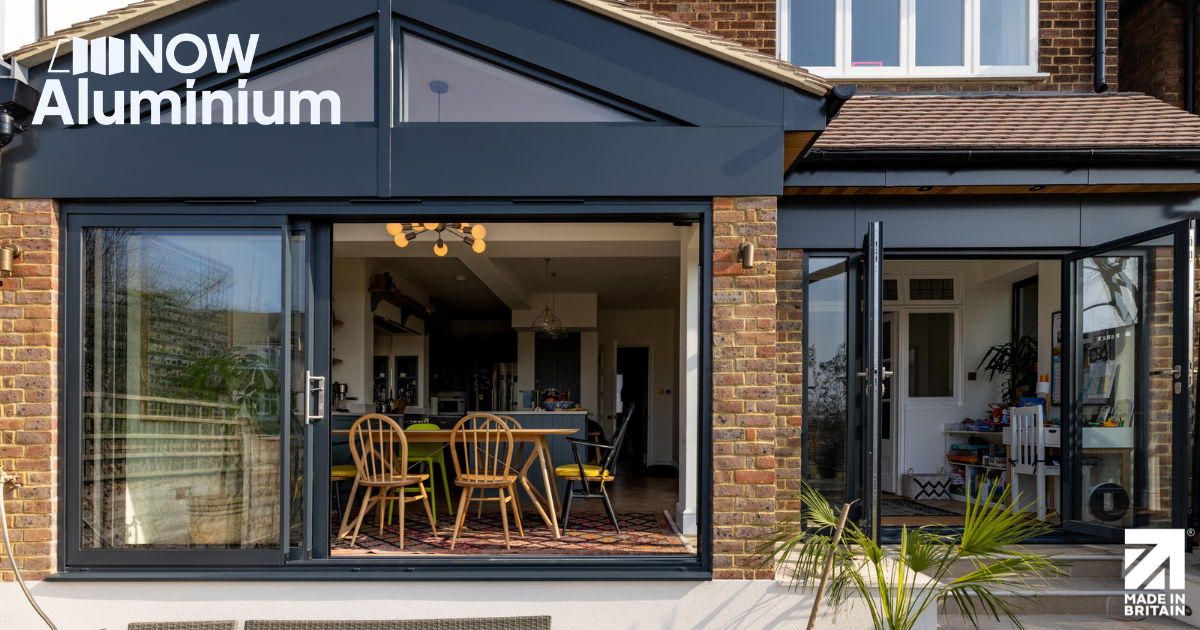
If you're planning an extension, replacing old patio doors or designing a new-build home, you've probably found yourself comparing bifold doors and sliding doors. And if you're anything like most homeowners, you've probably changed your mind at least once already.
One day it's bifolds, the next it's sliders.
Then you see a beautiful project on Instagram and you're back to where you started.
The truth is both are excellent options. That's what makes the decision difficult. Both bring in more natural light. Both help create a stronger connection to the garden. Both can make a room feel bigger, brighter and more enjoyable to spend time in.
But once you move beyond the pictures and product brochures, you'll find they deliver very different experiences in everyday life.
That's why we don't think the real question is: "Which door is better?"
Instead, ask yourself: "How do I want this room to feel when the project is finished?"
In our experience, that's usually where the answer starts to become clear.
Why This Decision Isn't As Simple As It Used To Be
A few years ago, bifold doors seemed to be everywhere. If somebody was building a kitchen extension, chances are bifolds were included in the plans. They became the feature everyone wanted.
Open the doors. Blur the line between home and garden. Enjoy indoor-outdoor living. Simple.
But things have changed - Modern sliding door systems have improved dramatically in recent years. Glass panels are larger. Frame profiles are slimmer. Sightlines are smaller than ever before. That's one of the reasons sliding doors have become increasingly popular on contemporary homes, self-build projects and architect-led renovations.
At the same time, bifold doors haven't gone anywhere.
In fact, they're still one of the most effective ways of opening up an entire wall and transforming how a space works.
What's changed is that homeowners now have two genuinely strong options, and that's a good thing.
First Things First: What's The Actual Difference?
Before getting into the pros and cons, it's worth understanding what separates the two systems.
Bifold Doors
- Bifold doors are made up of multiple glazed panels connected by hinges.
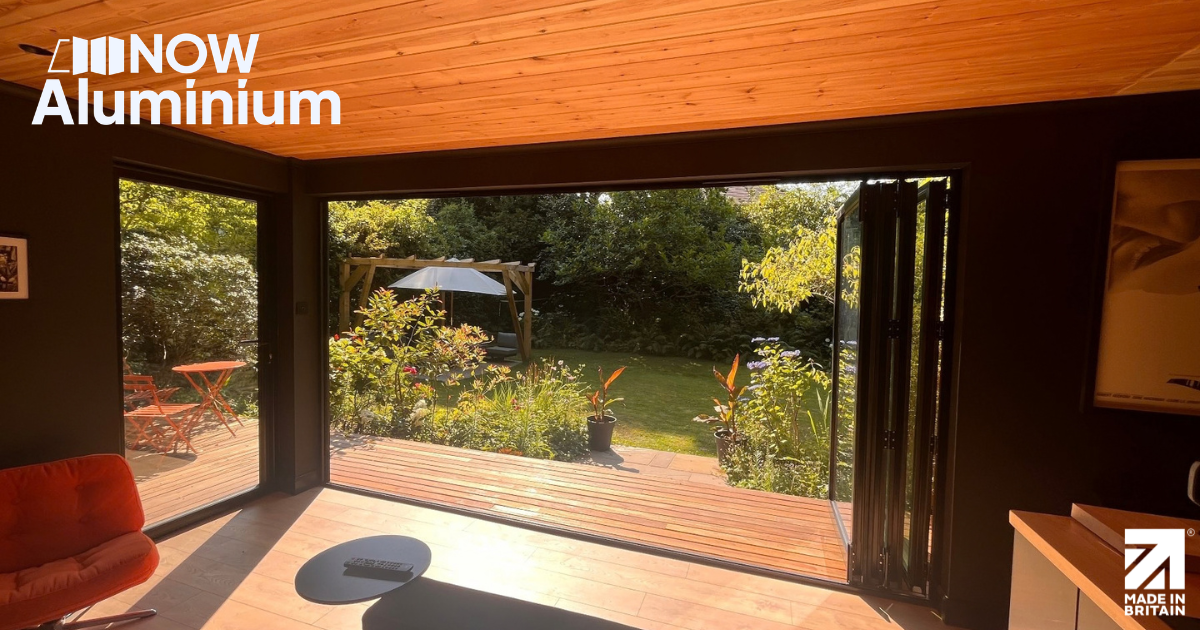
- As the doors open, the panels fold back against each other in a concertina arrangement and stack neatly to one side or split to both sides depending on the configuration.
The biggest benefit? When fully opened, bifold doors can leave up to 90-95% of the opening clear.
Sliding Doors
- Sliding doors work differently. Large glass panels slide horizontally along a track, with one panel moving behind another.
- The result is a cleaner, more minimalist appearance with larger uninterrupted panes of glass.
- The compromise is that part of the opening will always remain occupied by a fixed or parked panel. Most systems provide around 50-60% of the total opening as usable access.
Neither is right. Neither is wrong.
They're simply designed to solve different problems.
If Your Dream Is Opening Up The Back Of The House, Bifolds Still Lead The Way
Let's start with what bifolds do best.
Opening space - Because the panels fold away neatly, they create an opening that's difficult for any other door system to match.
And when we say opening, we mean opening.
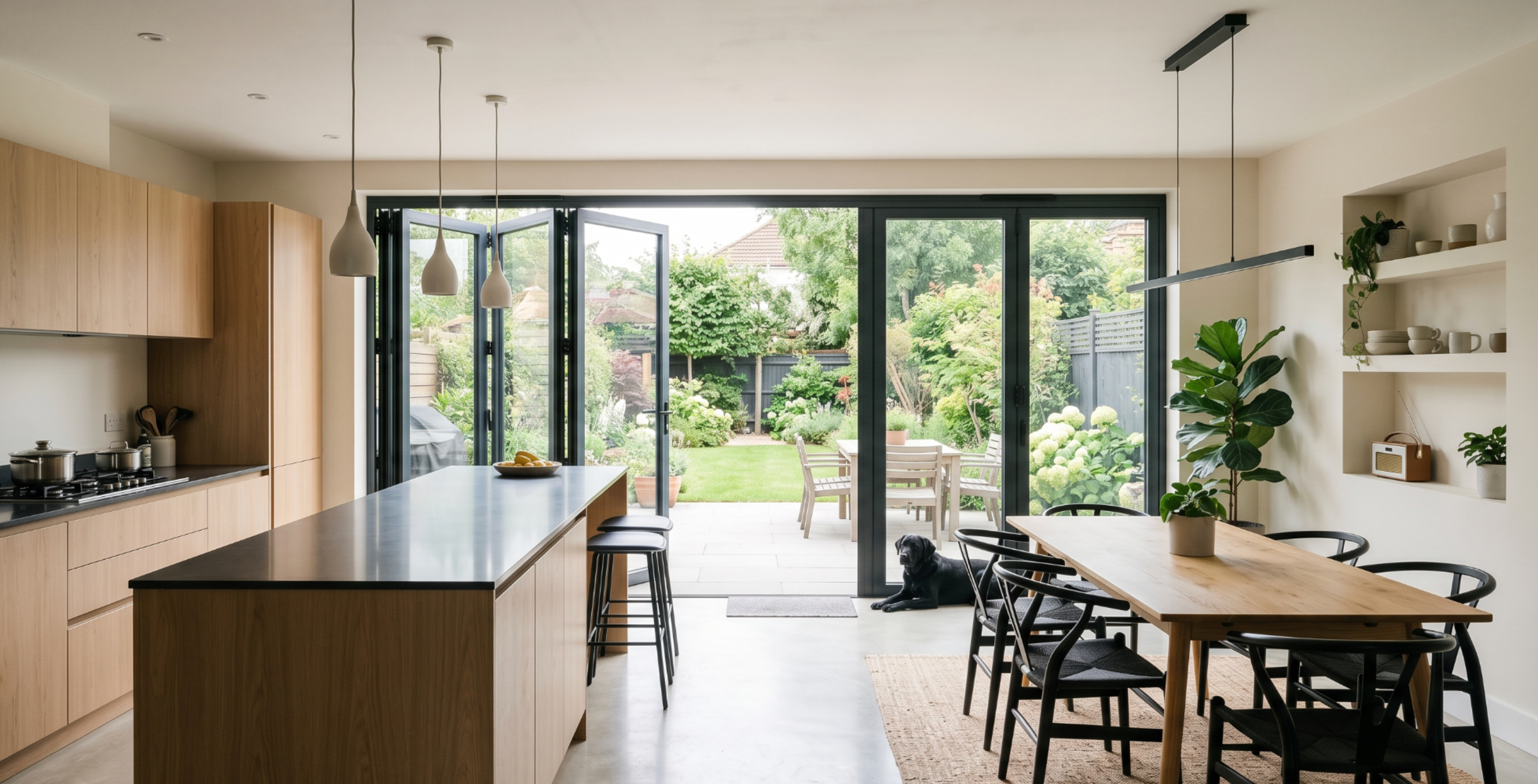
On a warm summer evening the effect can be dramatic. The kitchen suddenly spills out onto the patio. Guests move in and out without thinking about it. The garden feels like part of the house.
That's why bifolds continue to be such a popular choice for:
- Kitchen extensions
- Family homes
- Entertaining spaces
- Garden-focused renovations
- Homes where outdoor living plays a big role
If you regularly host friends and family or simply spend a lot of time outside during spring and summer, bifolds offer something genuinely special.
Not because they're trendy. Because they work!  There's Something Else Homeowners Love About Bifolds
Flexibility - Most modern systems include what's often referred to as a traffic door. In simple terms, that's a standard everyday access door built into the system.
So, if you're letting the dog out, carrying items in from the garden or popping outside with a cup of tea, you don't need to fold back the entire set of doors.
It's a small detail. But it's one homeowners’ appreciate every day.
Bifolds can also be configured in numerous ways depending on the opening and available space.
They can stack left. Stack right. Split in the middle. Open inwards. Open outwards. And in some cases, they can even create impressive corner openings.
That flexibility allows the system to work with the house rather than forcing the house to work around the doors.
 Why More Homeowners Are Choosing Sliding Doors
Now let's switch perspectives, imagine you're sitting in your kitchen on a cold January morning.
The doors aren't open, they're not going to be open. You're simply enjoying the view.
This is where sliding doors come into their own.
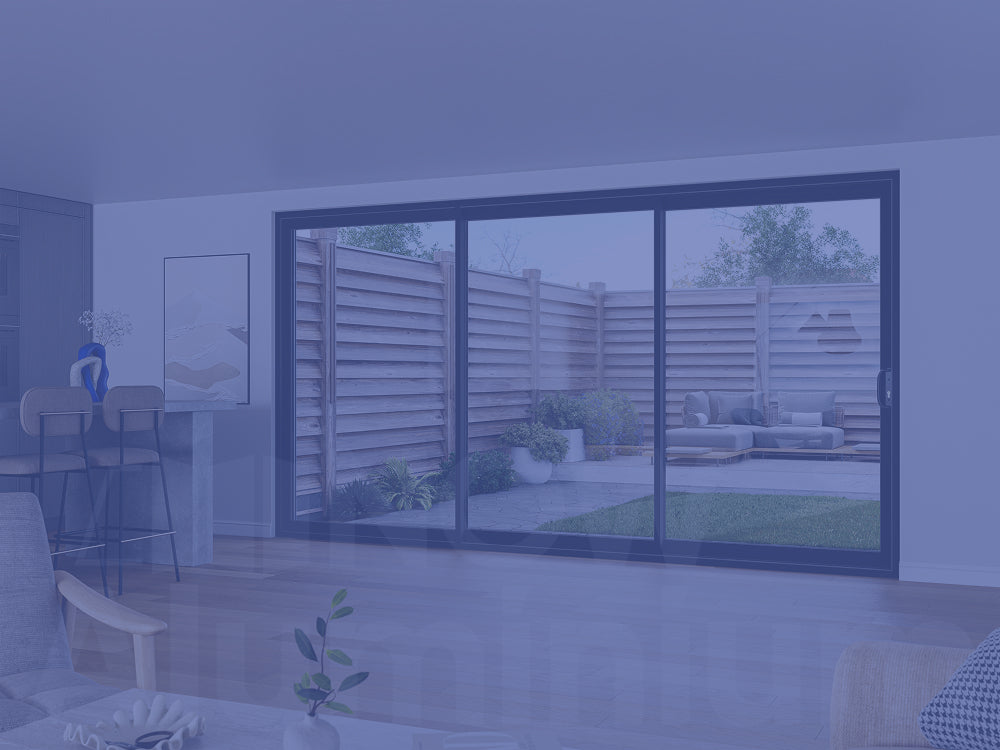
Because when the doors are closed, what you mostly see is glass - Less frame with less interruption and more of what you want – the view!
Modern sliding door systems can accommodate impressively large glass panels while maintaining slim sightlines that help keep the focus on the outside world.
For properties that overlook landscaped gardens, open countryside or coastal locations, that can make a significant difference.
It's also one of the reasons architects increasingly favour sliding doors on contemporary projects.
The glazing becomes part of the architecture. The frame almost disappears. The view becomes the focal point.
More Glass Means More Natural Light
Natural light changes how a room feels, nearly all homeowners we speak to know that instinctively. You walk into a bright room and it immediately feels bigger, lighter and more welcoming.
Sliding doors often maximise natural daylight because there are fewer frame sections interrupting the glass.
Now, that's not to say bifolds don't provide plenty of light - They absolutely do.
But if your goal is squeezing every available drop of daylight into a room, sliding doors usually have a slight advantage. Particularly across larger openings.
The Biggest Mistake We See Homeowners Make
Honestly?
It's not choosing bifolds and it's not choosing sliders - It's making the decision based on one perfect summer afternoon.
We've seen homeowners choose bifolds because they loved the idea of opening the entire rear elevation. Then discover they only fully open them a handful of times each year.
We've also seen homeowners choose sliding doors because they loved the minimalist appearance. Then realise they wanted easier access to the garden for family life and entertaining.
Neither made a bad decision. They simply prioritised the wrong thing.
Real life matters more than the showroom. Think about a normal day at home.
The weather isn't perfect. You're making dinner. The kids are running around. The dog wants to go outside. What matters most?
The view? The access? The light? - That's the question worth answering.
Let's Talk About Sightlines
Sightlines have become one of the most talked about features in modern glazing.
But what are they?
Put simply, sightlines refer to the amount of visible frame you see when looking through the doors.
Slimmer sightlines mean more glass and less aluminium.
That's why sliding doors often appeal to homeowners who are chasing a sleek contemporary look. Because bifold systems rely on multiple panels, you'll naturally see more vertical frame lines when the doors are closed.
Sliding systems generally deliver a cleaner visual appearance with fewer interruptions. For some people, that's a major factor. For others, it's barely noticeable.
What About Energy Efficiency?
This is one of the questions that comes up on almost every project.
Years ago, some people assumed bifold doors were less energy efficient because they contain more moving parts and more frame junctions.
Thankfully, modern aluminium systems have come a long way.
Today's premium bifold and sliding door systems use advanced thermal break technology, high-performance glazing and sophisticated weather sealing to achieve excellent levels of thermal performance.
In reality, factors such as:
- Glazing specification
- Frame quality
- Weather seals
- Installation standards
often have a greater impact than the opening style itself.
Could sliding doors hold a small theoretical advantage due to having fewer panel junctions? - Possibly.
But most homeowners will notice far greater benefits from choosing a high-quality product supplied and installed correctly.
Good installation beats clever marketing every time.
Are Sliding Doors Easier To Maintain?
Generally speaking, yes, only slightly, but yes.
Bifold doors contain more moving components from more hinges, more rollers and more locking points. That's simply the nature of the design.
Sliding doors are mechanically simpler.
That doesn't mean bifolds are high maintenance. Far from it.
Modern systems are incredibly reliable. But if we're being completely honest, sliding doors usually require a little less ongoing attention over the years.
Which Option Adds More Value To A Home?
Let's be honest. ,
Almost everyone asks this question. The answer is probably less exciting than you'd expect.
Buyers don't usually arrive at a property and say: "We'll offer an extra £20,000 because those are bifolds."
That's not how people buy homes. What they notice is how a space feels.
They notice:
- Natural light
- Modern glazing
- Easy garden access
- Contemporary design
- Quality finishes
- Bright open-plan layouts
A well-designed installation using either system can make a property feel significantly more desirable.
In traditional family homes, bifolds remain a sought-after feature.
In more contemporary properties, large sliding doors are increasingly seen as a premium architectural element.
The winner isn't the door itself. It's how well the door suits the property.
What Are Homeowners Choosing In 2026?
There's a noticeable split happening across the market.
Bifold doors remain incredibly popular for:
- Family homes
- Extension projects
- Entertaining areas
- Garden-focused renovations
- Indoor-outdoor living
Sliding doors are becoming increasingly popular for:
- Luxury homes
- Self-build projects
- Contemporary architecture
- Architectural renovations
- Properties with exceptional views
What's interesting is that both groups are actually chasing the same thing.
More light. More glass. Better views. A stronger connection to the outdoors.
They're just getting there in different ways.
So Which Should You Choose?
Honestly?
Most homeowners already know the answer before they finish reading an article like this.
They just need a little reassurance.
If you've spent this entire article imagining summer evenings with the doors fully folded away and the garden becoming part of the house, bifolds are probably your answer.
If you've spent the whole time thinking about huge panes of glass and uninterrupted views, you're probably leaning towards sliding doors.
And that's fine. Because this isn't really about doors. It's about how you want to live.
The best installations aren't remembered because they featured a particular sightline measurement or glazing specification.
They're remembered because of how they changed the room. How they changed the light. How they changed the way people used the space.
That's what you'll notice every day, and that's what you'll still appreciate ten years from now.
*The research and insights in this article were informed by a combination of manufacturer guidance, installer expertise, glazing industry publications, and homeowner resources.