

 By Chris Beaven
Not that long ago, interior doors were something you picked near the end of a project.
The walls were up, the flooring had been chosen, and eventually you're asked:
"What are we doing about the doors?"
Today, they're often part of the conversation right from the start.
That's because interior doors do much more than separate rooms. They influence how light moves through a home, how spaces connect and even how comfortable a property feels day to day.
We're seeing more homeowners look for ways to create quieter, more practical spaces without closing everything off. Open-plan living is still popular, but not everyone wants one giant room where work calls, homework, cooking and television all happen at the same time.
Interior glazing systems have become the middle ground. They help define a space without making it feel boxed in. They bring structure without sacrificing light.
And when designed well, they can completely change how a home works.
The Open-Plan Reality
Open-plan living isn't going anywhere. The feeling of space, the connection between rooms and the ability to bring family life together all make it hugely appealing.
But after living in a completely open space for a few years, many homeowners have started to realise that it isn't always perfect.
- A parent is on a video call.
- Someone else is trying to finish homework.
- The dog is barking.
- The television is on.
- Dinner is being cooked.
Suddenly that large open room doesn't feel quite as practical as it did on the architect's drawings.
We're seeing more homeowners trying to regain some separation without losing the openness they worked so hard to achieve.
That's exactly where aluminium interior doors come into their own. They create boundaries when you need them while keeping spaces visually connected.
Why Glass Interior Doors Have Become So Popular
Let's be honest, nobody has ever walked into a dark hallway and thought:
"This place could do with less light."
Yet that's often what happens when additional walls and traditional solid doors are introduced into a home.

Glass interior doors solve a surprisingly common problem. They allow rooms to function independently while still sharing natural light.
It's one of the reasons they're increasingly being used in:
- Home offices
- Kitchen diners
- Living rooms
- Hallways
- Garden rooms
- Snugs and reading spaces
The biggest difference after installation usually isn't the door itself. It's the way the whole house feels. Brighter, airier, more connected. Natural light reaches areas it never reached before and the entire property benefits.
Can Interior Doors Actually Make a Home Feel Bigger?
It sounds backwards. You're adding a divider, so surely the room should feel smaller?
Not always.
In fact, some of the most successful renovation projects use interior glazing to make spaces feel larger and more purposeful.
When every area has a clear function, a home often feels easier to use. Less chaotic and better thought through. The key is maintaining those important sightlines.
Glass allows your eye to travel through the home rather than stopping at a solid wall, creating a greater sense of depth and openness. It's a simple design principle, but it makes a huge difference.
Particularly in:
- Kitchen extensions
- Open-plan renovations
- Self-build projects
- Loft conversions
- Modern family homes

Why Aluminium Is the Material of Choice
We're slightly biased of course, but for contemporary interior glazing systems, aluminium makes a lot of sense.
The material offers a combination of strength, durability and design flexibility that's difficult to match.
More importantly, it allows designers to achieve the slim-framed look that homeowners are increasingly looking for.
Slim Frames, More Glass, More Light
One of aluminium's biggest advantages is its strength.
Because it's incredibly strong, frame profiles can remain slim while still delivering excellent performance. That means more glass and less frame. More natural light. Cleaner sightlines. A more refined appearance overall.
When people picture modern interior glazing, this is usually what they're imagining.
Large, glazed panels framed by elegant, minimal aluminium sections.
Another reason aluminium continues to grow in popularity is the balance it offers between aesthetics and practicality. Many of the industrial-style doors seen in magazines and on social media take inspiration from traditional steel glazing. While steel can create a striking look, it often comes with a significantly higher price tag. Aluminium allows homeowners to achieve a very similar aesthetic in a more cost-effective way, without compromising on style.
There are practical benefits too. Aluminium is naturally resistant to corrosion, so it won't rust over time in the way untreated steel can. Combined with its strength, durability and low-maintenance qualities, it's easy to see why aluminium has become the preferred choice for many contemporary interior glazing systems.
Low Maintenance by Design
Most homeowners have enough jobs on their list already.
The last thing they want is another product that needs regular sanding, repainting or ongoing maintenance.
That's another reason aluminium continues to grow in popularity. It's built to last and requires very little attention beyond routine cleaning.
For busy households, that's a major advantage.
More Than Just Black
Black interior doors remain one of the most requested options. There's a good reason for that. They work with almost every style of interior.
- Modern
- Industrial
- Traditional
- Scandinavian
- Minimalist
But black isn't the only choice.
Today's powder-coated aluminium systems are available in a wide range of colours, allowing homeowners to create something that feels completely tailored to their property.
The Industrial Door Trend That's Here to Stay
Some design trends come and go. Industrial-style interior doors don't seem to be one of them.
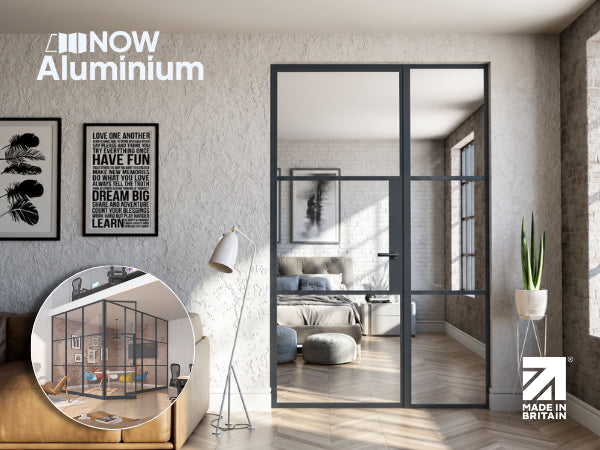
Inspired by traditional steel-framed glazing found in warehouses and factory buildings, industrial doors have become a modern classic.
While the original look was created using steel, many homeowners now choose aluminium systems to achieve the same industrial-inspired aesthetic. The slim sightlines and distinctive glazing bars remain, but with the added benefits of lower maintenance, improved practicality and a more accessible price point.
- Slim frames
- Glazing bars
- Large glass panels
- Strong architectural lines
The appeal comes from their ability to create a feature without dominating the room.
They add character, but they're not overpowering.
In our experience, they're also remarkably versatile. We've seen industrial-style interior doors work beautifully in Victorian renovations, contemporary extensions, period cottages and new-build homes.
Good design tends to have that effect. It doesn't date quickly.
What About Privacy?
One of the first questions homeowners ask is whether glass doors provide enough privacy.
The answer depends almost entirely on the glazing specification.
Clear glass remains the most popular choice where maximising light flow is the priority.
But there are plenty of alternatives available.
Reeded Glass
- A popular option for home offices and living spaces.
- It softens visibility while still allowing generous levels of light through the glass.
Fluted Glass
- Adds texture, depth and a slightly more decorative appearance.
- Increasingly popular in contemporary interiors.
Obscure Glass
- Ideal where privacy is more important than visibility.
- Often specified in utility areas or workspaces.
In short, homeowners don't necessarily have to choose between privacy and light.
Modern glazing options make it possible to achieve both.

Designing Homes Around Modern Life
The way we use our homes has changed. A lot.
A few years ago, very few renovation projects included dedicated Zoom or Teams rooms, work zones or study areas. Now they're often near the top of the wish list.
Homes are expected to do more than ever before.
- Work
- Relaxation
- Family life
- Exercise
- Entertainment
Sometimes all within the same floorplan.
That's why interior glazing has become such a valuable design tool. It allows spaces to adapt.
- A home office can feel connected to the rest of the house without becoming part of the daily noise.
- A snug can feel cosy without becoming dark.
- A kitchen can be separated from a living room without feeling disconnected.
The result is a home that works harder without feeling more enclosed.
Common Mistakes to Avoid
After years of seeing renovation projects take shape, there are a few mistakes that come up time and time again.
Choosing With Your Eyes Only
A door may look fantastic on Instagram, but that doesn't mean it's right for your home.
Always start by identifying the problem you're trying to solve.
Do you want:
- More light?
- More privacy?
- Better acoustic separation?
- Improved layout?
- A stronger design feature?
Answer that first and the right product usually becomes much easier to identify.
Forgetting About Everyday Life
It's easy to get caught up in photographs and inspiration images.
But you'll walk through that door thousands of times.
Think about how it will be used on a normal Tuesday afternoon, not just how it'll look in a finished project photo.
Going Too Small
This is probably the biggest one.
Most homeowners never regret adding more glazing. They often regret not adding enough.
More glass nearly always means more light.
And more light almost always improves how a space feels.
Our View
If we're honest, one of the biggest mistakes people make is thinking they're choosing a door.
They're not!!
They're choosing how they want to live.
The door is simply the solution.
Want a brighter home? Want a better home office? Want to separate spaces without losing openness?
That's where the decision should start.
The best interior door systems aren't necessarily the most expensive or the trendiest. They're the ones that improve everyday life.
That's why aluminium interior doors continue to grow in popularity. They bring together light, flexibility, durability and good design in one solution.
And when they're specified well, they don't just divide rooms. They help transform how the whole home feels.
FAQs
Are aluminium interior doors worth it?
Aluminium interior doors offer slim sightlines, excellent durability and low-maintenance requirements. They are ideal for homeowners looking to maximise glass and create a contemporary interior design aesthetic.
Do interior glass doors provide privacy?
Yes. Privacy levels depend on the type of glazing selected. Popular options include reeded glass, fluted glass and obscure glass, each offering different levels of privacy while still allowing light to pass through.
Are black interior doors still in style?
Absolutely. Black-framed interior doors remain one of the most popular design choices in UK homes and are increasingly considered a modern classic rather than a passing trend.
Can interior doors make a room feel larger?
Yes. Glazed interior doors help maintain sightlines throughout a property, allowing natural light to travel further and creating a greater sense of openness.
What's the difference between steel-look and aluminium interior doors?
Steel-look aluminium doors replicate the appearance of traditional steel glazing while offering a number of practical advantages. Aluminium is lighter, requires very little maintenance and is naturally resistant to corrosion, meaning it won't rust over time. It's also typically a more cost-effective option than genuine steel, making it a popular choice for homeowners looking to achieve an industrial-style look without the additional expense.
Where can aluminium interior doors be used?
They are commonly used between kitchens and living rooms, home offices, hallways, garden rooms, dining rooms and open-plan spaces where separation is required without losing natural light.